
2026-07-09 · Travel · Landscape
Durdle Door: How the Sea Carved a Doorway Through Stone
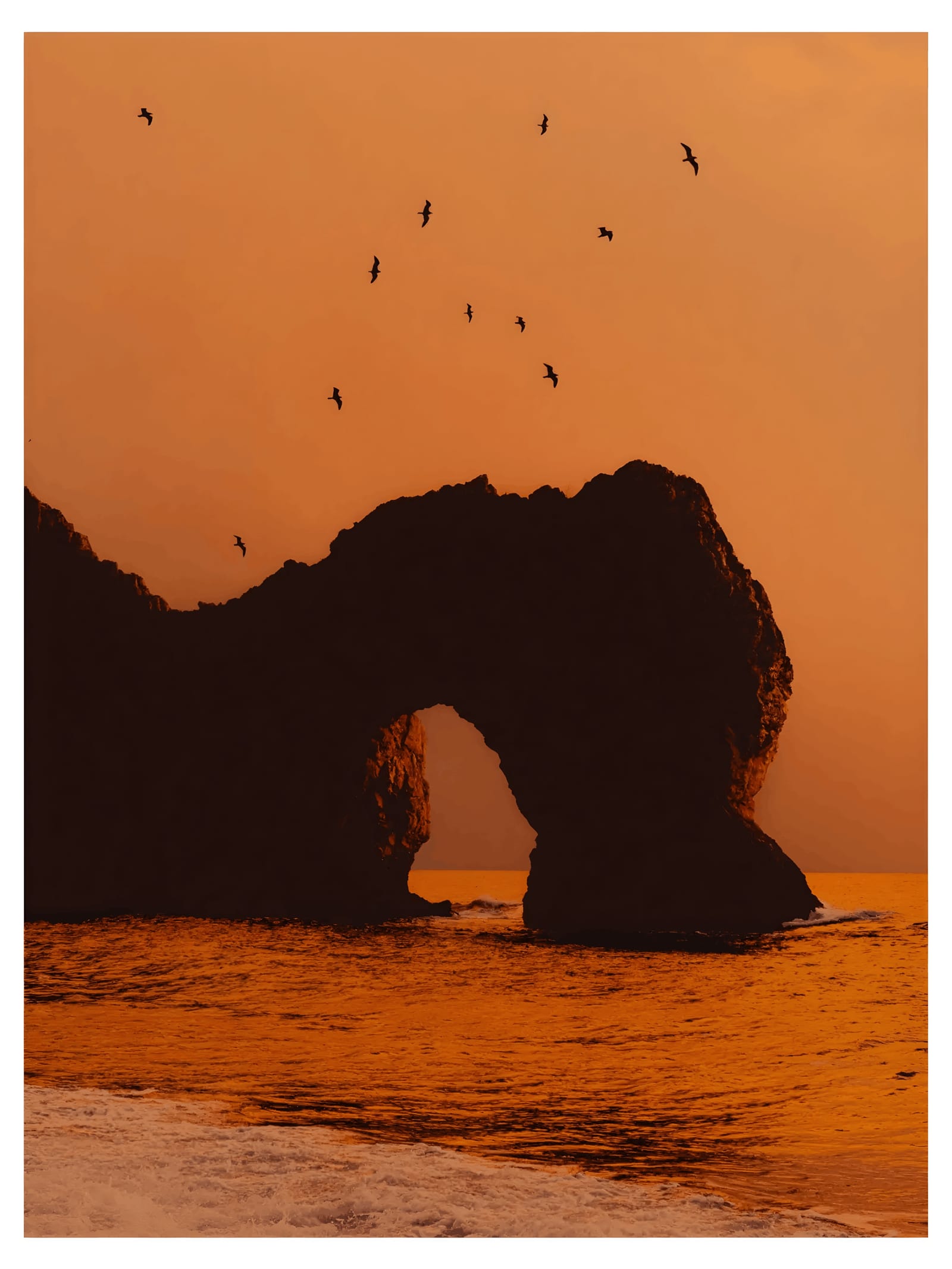
Durdle Door sits on England's Jurassic Coast, a stretch of coastline where the rock layers themselves span roughly 185 million years of geological history. The arch is a limestone ridge that the sea has been eroding for thousands of years, and it's still an active, ongoing process today.
Cave, arch, then stack
Coastal arches like this follow a fairly predictable sequence. Waves find a weakness in a headland — a crack or softer band of rock — and erode it into a cave. Given enough time, a cave on a narrow enough headland erodes all the way through to the other side, creating an arch. Eventually the arch's roof collapses under its own weight, leaving an isolated column of rock called a stack.
Durdle Door is mid-sequence
The arch as it stands now is the middle stage of that process — not the beginning, and not the end. Erosion is continuous, which means the shape photographed today is, geologically speaking, temporary. It will eventually collapse into a stack, the same way other formations along this coast already have.
Why the rock resists differently
The ridge Durdle Door cuts through is harder Portland limestone, while the softer clay and sand behind it erodes faster. That difference in hardness is why the headland holds its shape long enough to form a dramatic arch instead of wearing down evenly — the harder band effectively acts as its own frame.